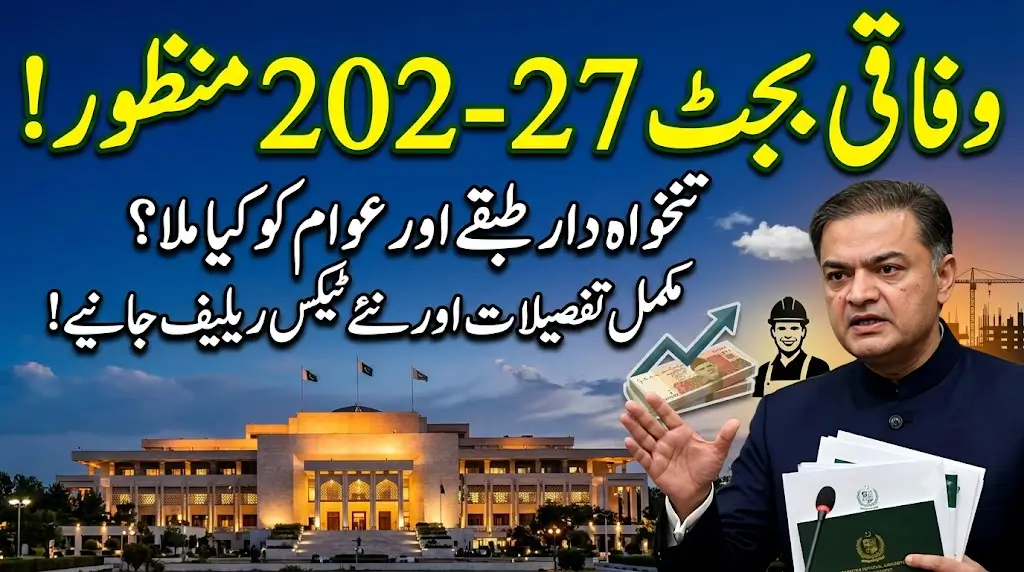
National Assembly Approves Finance Bill 2026-27
National Assembly Approves Finance Bill 2026-27 on Tuesday approving Pakistan Rs. 18.77 trillion federal budget for fiscal year 2026-27. The bill presented by Finance Minister Muhammad Aurangzeb includes tax relief for salaried workers incentives for exporters and support for real estate and construction sectors targeting Rs. 15.264 trillion in tax revenue a 17.6% increase over the current year revised estimate.
Pakistan Budget 2026-27 Passed Amid Opposition Protests
The Finance Bill 2026-27 was passed during a stormy National Assembly session where the treasury benches secured support from coalition allies despite loud protests staged by opposition lawmakers finance Minister Muhammad Aurangzeb moved the bill along with several government-backed amendments, all of which were approved by the House, while every amendment proposed by the opposition was rejected.

Following the passage of the finance bill the National Assembly session was adjourned until 11am on Wednesday the approval marks a significant legislative milestone for the ruling coalition which managed to hold its parliamentary majority intact despite intense pressure from opposition parties during the proceedings.
You Can Also Read: NADRA Face ID Verification Now Enables Pension Payments from Home
| Budget Item | Key Detail |
|---|---|
| Total Federal Budget | Rs. 18.77 trillion for FY 2026-27 |
| FBR Tax Target | Rs. 15.264 trillion |
| Tax Target Increase | 17.6% above revised FY26 estimate |
| GDP Growth Target | 4% for FY 2026-27 |
| Salaried Class | Income tax relief and revised tax slabs |
| Export Sector | Tax incentives to support exports |
| Real Estate & Construction | Tax concessions and lower withholding tax |
| Finance Bill Status | Approved by the National Assembly |
FBR Tax Collection Target Set at Rs. 15.264 Trillion for FY27
Despite facing an estimated revenue shortfall of nearly Rs. 1 trillion in the outgoing fiscal year, the government has set an ambitious FBR tax collection target of Rs. 15.264 trillion for FY2026-27. This is measured against the revised revenue estimate of Rs. 12.983 trillion for the current fiscal year, representing a steep 17.6% jump in projected tax revenue.
Meeting this elevated target will require significant broadening of the tax base and improved compliance enforcement across multiple sectors. The government’s growth-linked revenue strategy hinges on achieving a GDP growth rate of 4%, which itself depends on sustained industrial recovery, export expansion, and macroeconomic stabilization over the coming months.
You Can Also Read: Big Relief for Citizens PM Shehbaz Confirms Major Petrol Price Reduction
Income Tax Relief for Salaried Employees in Budget 2026-27
- Salaried class receives targeted income tax relief to ease the burden of rising living costs.
- Tax slabs have been revised upward, meaning lower-income earners will fall into lighter tax brackets.
- Government aims to increase disposable income for middle-income employees amid inflation pressures.
- The relief package is positioned to reduce wage-earner dissatisfaction and boost domestic consumer spending.
- Withholding tax adjustments for salaried individuals are part of the broader income tax reform agenda.
Export Sector Tax Incentives to Drive Economic Growth to 4%
The Finance Bill 2026-27 introduces a package of tax incentives specifically crafted to boost Pakistan export performance the government is banking on these measures to make Pakistani goods more competitive in international markets reviving foreign exchange earnings that are crucial to stabilizing the country’s external account and reducing dependence on IMF-backed borrowing programs.
These incentives are designed to encourage investment in export-oriented industries create new employment opportunities, and help the country achieve its projected GDP growth rate of 4% for the next fiscal year the broader strategy reflects the government’s intent to shift Pakistan’s economy from consumption-driven to production and export-driven growth.
You Can Also Read: Good News! For Punjab People Maryam Nawaz Announce Solar Panel Scheme
Real Estate and Construction Sector Tax Benefits 2026-27
- The construction and real estate sector receives special tax concessions to attract domestic and overseas investment.
- Reduced withholding tax rates on property transactions aim to formalize and expand the real estate economy.
- Construction-linked job creation is expected to rise as project-level incentives lower development costs.
- Property developers may benefit from revised capital gains tax timelines on new residential and commercial projects.
- These changes aim to channel remittance inflows from overseas Pakistanis into productive real estate assets.
Rs. 18.77 Trillion Federal Budget: What It Means for Pakistan
The Rs. 18.77 trillion federal budget for FY2026-27 is Pakistan largest ever in nominal terms, reflecting both the scale of the government development ambitions and the fiscal pressures from inflation, debt servicing, and defence expenditure. The budget was unveiled earlier this month and passed through the National Assembly with coalition support, signalling political backing for the economic reform roadmap.
For ordinary Pakistanis, the approved budget translates into a mix of targeted relief measures on one hand, and the continued challenge of meeting high revenue targets on the other the government ability to deliver on promised relief while simultaneously plugging the roughly Rs. 1 trillion revenue gap from the outgoing year will be the defining fiscal test of the 2026-27 period.
You Can Also Read: Punjab Solar Scheme Registration Portal Service Now Open For Beneficiaries
Coalition Unity Secures Budget Vote Against Opposition Pushback
The passage of the Finance Bill was not without political turbulence opposition lawmakers staged noisy protests throughout the session, challenging various provisions of the bill and moving a series of amendments all of which were voted down the government’s coalition partners remained unified, providing the numerical majority needed to pass both the original bill and the government-backed amendments without compromise.
This legislative outcome reinforces the ruling coalition’s grip on the National Assembly at a critical juncture in Pakistan’s economic recovery. The government’s ability to push through a sweeping fiscal package without substantive opposition concessions suggests internal coalition discipline remains strong.
Finance Bill 2026-27 Key Highlights at a Glance
- Total federal budget size: Rs. 18.77 trillion for fiscal year 2026-27.
- FBR tax collection target: Rs. 15.264 trillion a 17.6% rise over the revised FY26 estimate.
- Revenue shortfall in the outgoing year estimated at approximately Rs. 1 trillion.
- GDP growth target set at 4% through export revival and investment incentives.
- Relief provided to salaried class, exporters, real estate developers and construction industry.
- All government-backed amendments approved; all opposition amendments rejected in the House.
You Can Also Read: Punjab Budget 2026-27 Rs. 750 Billion Education Package Announced
Pakistan Economic Outlook Can FY27 Budget Deliver on Promises?
The Finance Bill 2026-27 now moves toward full implementation, with the government tasked with translating legislative intent into real economic outcomes. The dual challenge of expanding tax revenue by over 17% while offering relief to multiple sectors will require disciplined fiscal management and improvement in the overall business climate.
Pakistan’s economic trajectory in FY2026-27 will be watched closely by international lenders, credit rating agencies, and the business community. If the government can close the existing revenue gap, hit its tax collection milestones, and sustain political stability, the budget could serve as a credible foundation for medium-term fiscal consolidation and its real impact on ordinary Pakistanis will become clear in the months ahead.