Sindh Announced Free Home Solar System
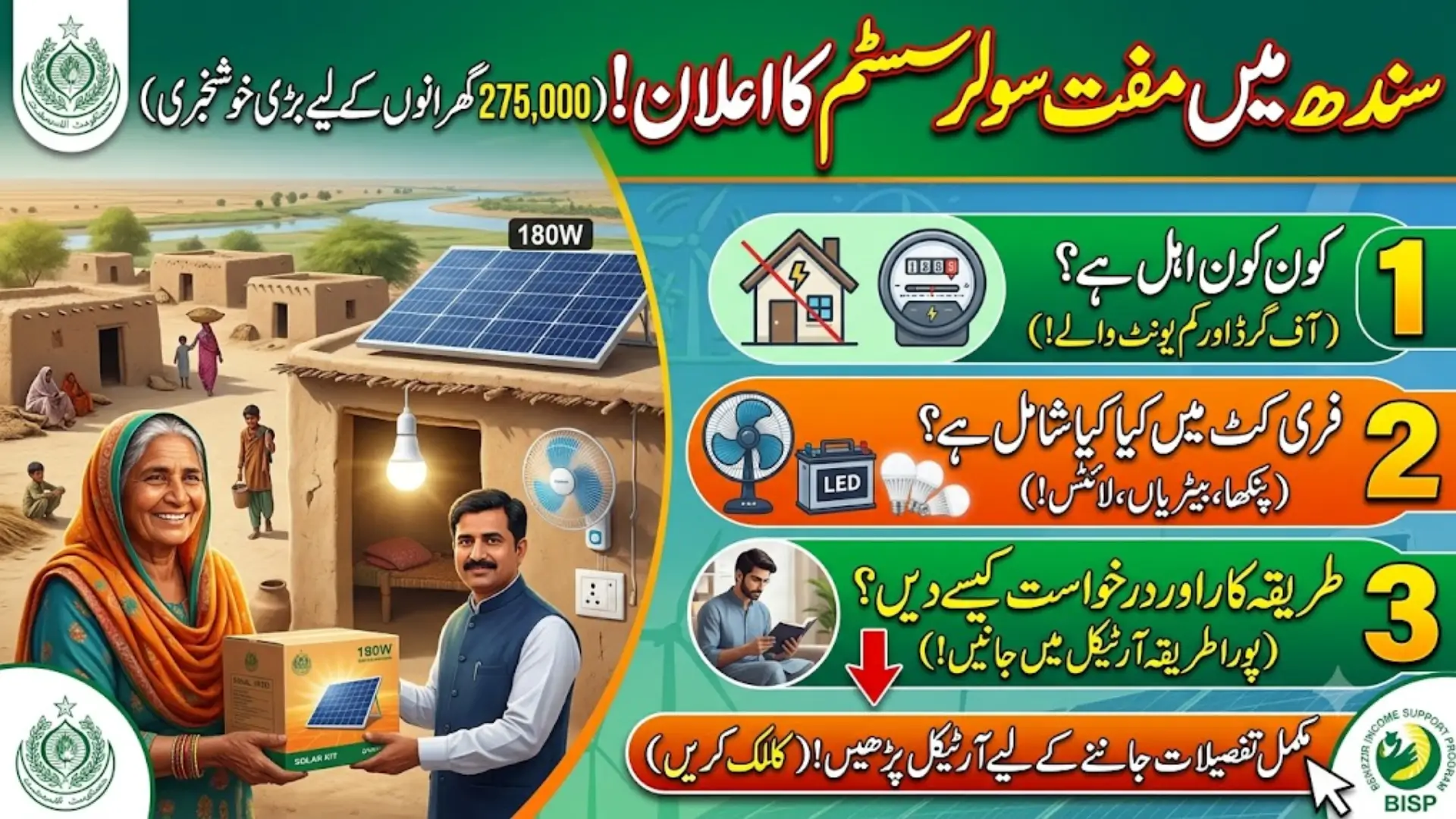
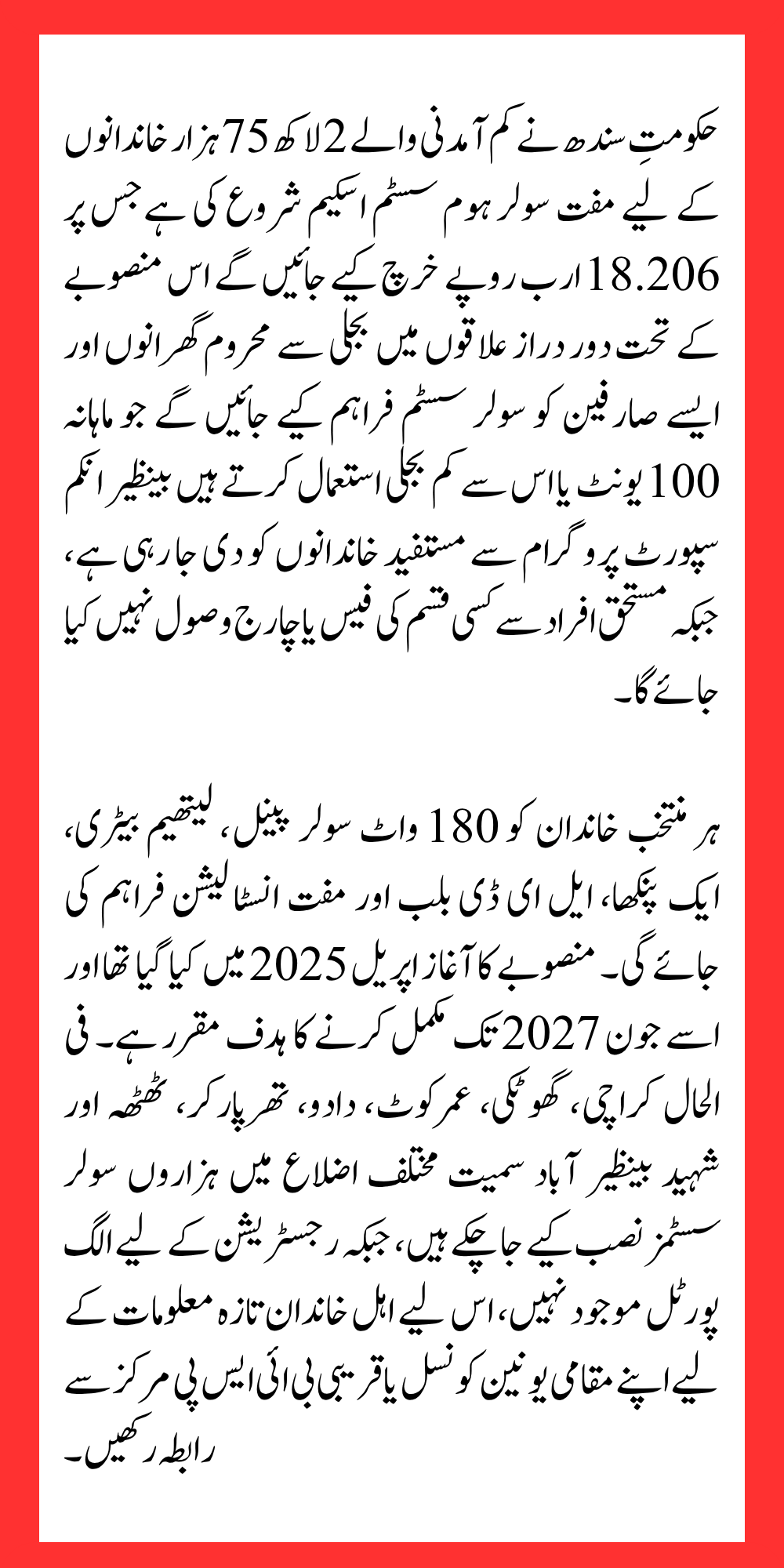
Sindh Announced Free Home Solar System: Sindh government has launched a large-scale solar energy program that will supply free home solar units to 275,000 low-income households across the province. The project carries a total budget of Rs. 18.206 billion and is designed to reduce electricity costs for families who currently struggle to afford grid power or live without any power connection at all.
Sindh Solar Home System Scheme Overview
Chief Minister Murad Ali Shah reviewed the progress of this energy initiative during a recent departmental meeting and instructed officials to speed up the installation process the plan focuses on two groups of households: those living completely off the power grid in far-flung areas, and those already connected to the grid but classified as low-consumption, protected users.
This dual approach means the benefit is not limited to villages without electricity infrastructure. Even families who receive a grid connection but use very little power each month are included, making the scheme one of the broadest rural and semi-urban energy relief programs Sindh has rolled out in recent years.
You Can Also Read: Punjab Govt Announced Free Solar Scheme 2026 Benefits
Who Qualifies for the Free Solar Panels
The government has divided beneficiaries into two clear categories based on their current electricity access.
- Around 132,000 households located in remote deserts, mountainous belts, and riverine regions where grid electricity has never reached will be connected through solar power instead.
- Nearly 143,000 households that already have a grid connection but consume up to 100 units of electricity per month qualify as protected consumers under this plan.
- Families listed in the Benazir Income Support Program database are being given preference during the selection and rollout phases.
- The scheme targets households in districts spread across Sindh, not just a single region, to ensure wider provincial coverage.
- Selection is being managed through the Energy Department in coordination with local administrations to keep the process transparent.
- No purchase, application fee, or hidden charge is involved for families who are selected under the eligible categories.
| Feature | Details |
|---|---|
| Scheme | Sindh Free Home Solar System |
| Target Families | 275,000 low-income households |
| Eligibility | Off-grid homes & protected users (up to 100 units/month) |
| Priority | BISP beneficiary families |
| Solar Kit | 180W panel, lithium battery, fan, LED bulbs & free installation |
| Cost | 100% Free (No application fee) |
| Project Period | April 2025 – June 2027 |
| Installed Districts | Karachi, Ghotki, Umerkot, Dadu, Tharparkar, Thatta & SBA |
| Application | No online portal yet. Selection through BISP & electricity records. |
What Comes Inside the Free Solar Kit
Every selected household is not just given a single panel and left to manage the rest. The package has been designed as a complete home lighting and appliance solution rather than a partial upgrade.
- A 180-watt solar panel capable of generating enough power for basic home needs.
- A lithium battery unit for storing electricity so it remains usable after sunset.
- An electric fan, which is one of the most requested items in Sindh’s hot climate.
- LED bulbs for home lighting that consume far less power than traditional bulbs.
- Installation support so families do not need to arrange technical setup themselves.
- The full kit is provided at zero cost to families who fall under the approved list.
You Can Also Read: CM Punjab Free Solar Panel Scheme 2026 Eligibility, Purpose, Benefits
Districts Where Solar Installation Has Already Begun
More than eleven thousand solar units have already been installed in the following districts, giving an early sign of how the rollout is progressing.
- Karachi
- Ghotki
- Umerkot
- Dadu
- Tharparkar
- Thatta
- Shaheed Benazirabad
Project Timeline and Completion Target
The solar distribution drive did not begin recently. It was actually launched in April 2025, and the government has set June 2027 as the deadline for reaching all 275,000 households across the province. Work on the ground started well before the recent review meeting took place, and installations in the districts listed above are part of this early phase.
Given the scale of the target, the rollout is being carried out in phases rather than all at once. This explains why installation numbers so far represent only a small portion of the overall goal, and the pace is expected to pick up now that the Chief Minister has directed the Energy Department to move faster on distribution and installation targets.
You Can Also Read: CM Punjab Solarization Program Registration Process Starts Again
How to Apply for the Free Solar System in Sindh
At this stage, the government has not opened a separate public application form or online portal specifically for this solar scheme. Selection is being carried out through existing government records, particularly the Benazir Income Support Program database and local electricity consumption data maintained by power distribution companies.
Families who believe they meet the eligibility criteria, such as living in an off-grid area or using minimal electricity units each month, are advised to stay in touch with their local union council office or nearest BISP center for updates. If a dedicated registration portal or application window is announced later, it is expected to be communicated through official Sindh government channels and local media.
Why This Initiative Matters for Sindh
Electricity access remains uneven across Sindh, with many rural pockets still cut off from the national grid entirely extending solar power to these households does more than just provide light after sunset. It reduces dependence on costly fuel alternatives like kerosene lamps, supports basic appliance use such as fans during extreme summer heat, and can ease the financial burden on families who otherwise spend a notable share of their income on electricity bills or alternative power sources.
For grid-connected but low-consumption households, the solar units can also help lower monthly bills by shifting part of their daily power use away from the grid Over time, this kind of shift may reduce strain on the provincial power distribution system as well The success of the program will largely depend on how quickly the Energy Department can scale up installations while keeping the selection process fair and transparent, particularly for families in the most remote parts of Sindh who have waited the longest for reliable power access.
You Can Also Read: 8800 Solar Scheme Online Registration For Punjab Beneficiaries