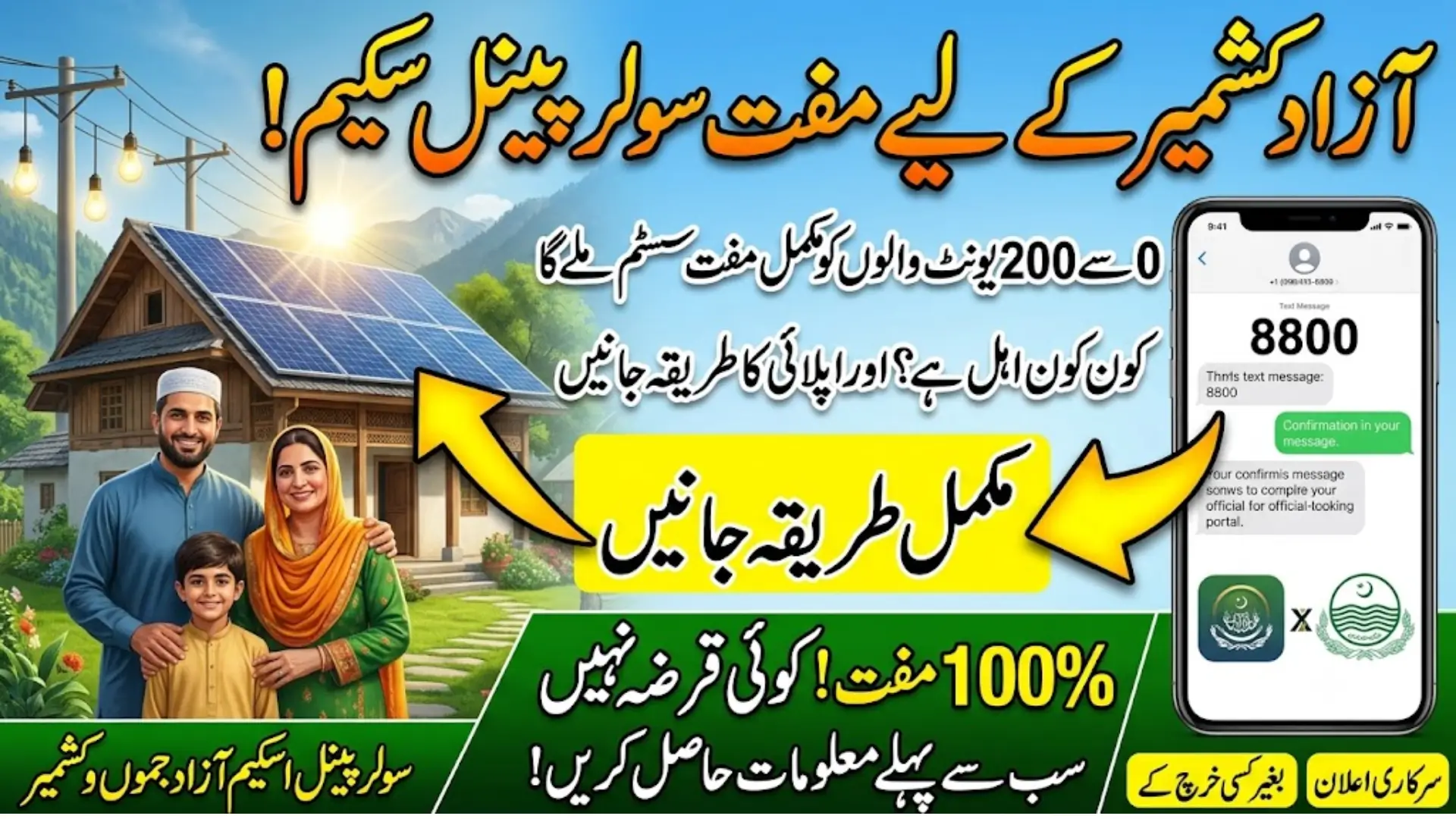
Solar Panel Scheme For Azad Jammu Kashmir
Solar Panel Scheme For Azad Jammu Kashmir: The Free Solar Panel Scheme has now been extended to Kashmir, giving eligible households access to a free solar system to cut electricity costs and reduce dependence on the national grid. Originally launched in Punjab under Chief Minister Maryam Nawaz Sharif, the program has been expanded to cover Kashmir, offering solar systems to homes with monthly consumption between 0 and 200 units.
What Is the Kashmir Free Solar Panel Scheme
This solar initiative allows qualifying households in Kashmir to receive a complete solar system without paying any cost upfront or in installments. Instead of a loan or a partial subsidy, the government provides the full system, letting families generate their own electricity directly from sunlight rather than relying entirely on grid supply.
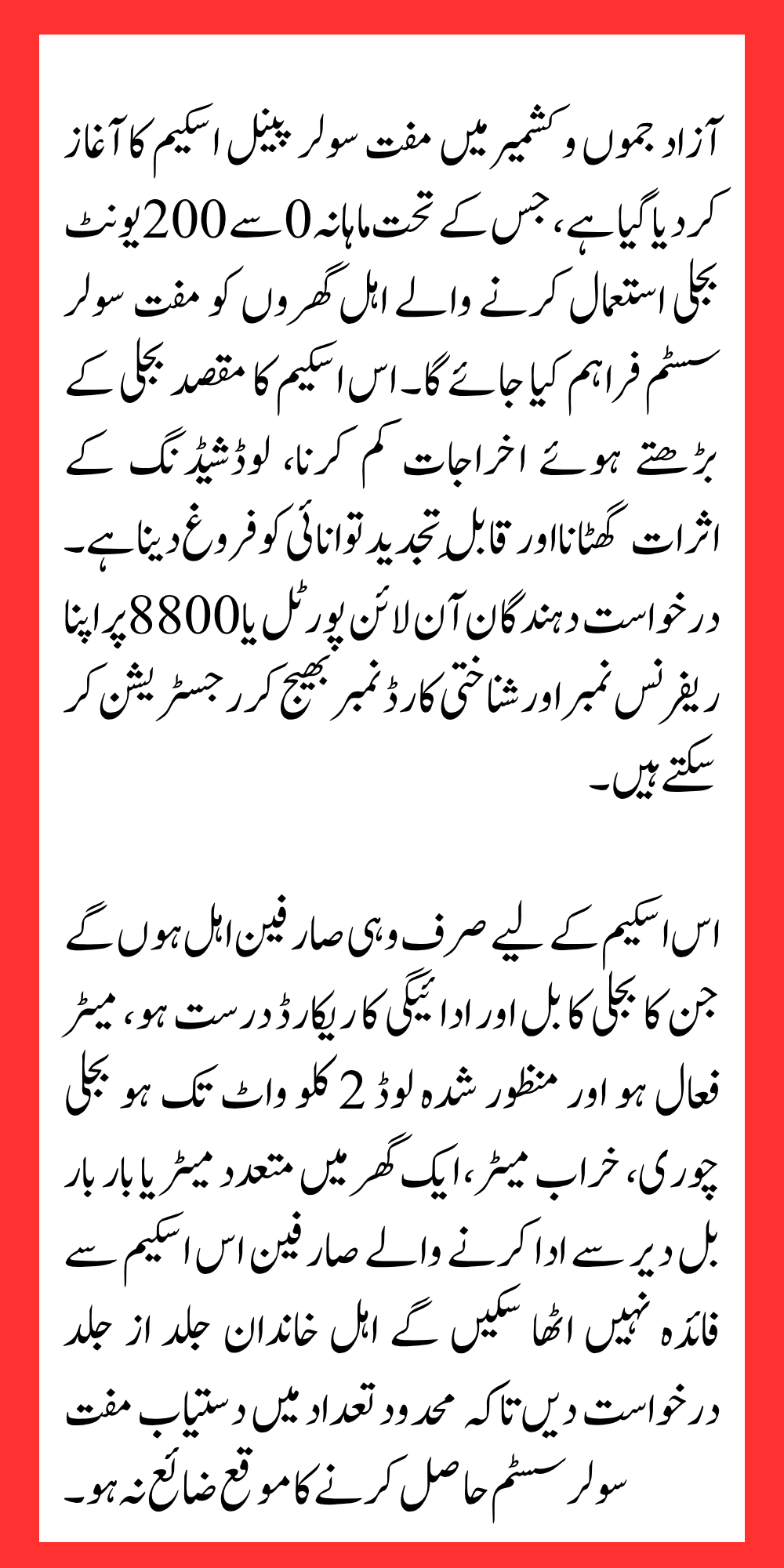
The extension of this program to Kashmir reflects a broader effort to bring renewable energy relief to regions facing similar electricity affordability challenges as Punjab. It follows the same basic structure already in place, with consumption based eligibility and a simple registration process designed to reach ordinary households rather than only urban centers.
You Can Also Read: Maryam Nawaz Announce Solar Subsidy For Low Budget Punjab Beneficiaries
| Feature | Details |
|---|---|
| Scheme | Free Solar Panel Scheme (AJK) |
| Eligibility | 0–200 electricity units/month |
| System Cost | 100% Free |
| Load Limit | Up to 2 kW |
| Registration | Online Portal or SMS to 8800 |
| Main Benefits | Lower bills, backup power, clean energy |
| Not Eligible | Power theft, faulty meter, multiple meters, payment defaults |
Why the Scheme Was Extended to Kashmir
Electricity costs have become a heavy burden for households across the region, and Kashmir is no exception. Extending this free solar initiative beyond Punjab signals an intent to widen renewable energy access to areas that often face higher transmission losses and less reliable grid supply.
By bringing solar systems directly to homes in Kashmir, the program aims to ease pressure on local power infrastructure while giving families a long-term, self-sustaining source of electricity that continues to save money for years after installation, without any repeat payments.
Benefits of Solar Panels for Kashmir Households
Households that receive a free solar system through this scheme can expect several practical improvements to their daily electricity situation.
- Noticeably lower monthly electricity bills
- Less reliance on grid power during outages or load shedding
- A smaller household carbon footprint over time
- More consistent power availability at home
- No repayment, installment, or hidden charges involved
- A step toward wider renewable energy adoption in the region
For families in areas where grid electricity is inconsistent, having an independent solar power source can make a noticeable difference in daily routines and household expenses.
You Can Also Read: CM Solarization Program Again Start In 2026 Know Full Guide How to Apply
Consumption Categories Eligible in Kashmir
Eligibility for the scheme depends on how many electricity units a household consumes monthly, along with the type of domestic connection registered with the local electricity provider.
- Up to 50 units under the Life Line category
- 51 to 100 units under the Life Line category
- 0 to 100 units under the Protected category
- 0 to 100 units under the Unprotected category
- 101 to 200 units under the Protected category
- 101 to 200 units under the Unprotected category
Eligibility checks are based on the household’s most recent monthly bill, and only connections with a sanctioned load of up to 2 kilowatts qualify for a free solar system.
Who Cannot Apply for the Kashmir Solar Scheme
To keep distribution fair, certain households are excluded from receiving a free solar system under this program.
- Consumers involved in electricity theft
- Connections with defective or non-functional meters
- Homes with multiple meters at a single residence
- Consumers with a history of frequent late payments
- Accounts flagged for payment default more than three times in a year
- Connections outside the approved consumption range
These conditions are meant to ensure that solar systems reach genuine households with a clean billing history rather than accounts with unresolved issues.
How to Register for Free Solar Panels in Kashmir
Registration for the scheme has been kept simple so that households without reliable internet access can still take part in the program.
- Visit the official web portal to submit an application online
- Enter your electricity consumer details exactly as shown on your bill
- Send an SMS with your reference number and CNIC to 8800
- Wait for a confirmation message about your application status
- Keep a recent electricity bill on hand for verification
- Reach out again through the same channel if there is no response
The SMS based registration option is particularly useful for households in remote parts of Kashmir where internet connectivity may not be consistent.
You Can Also Read: CM Punjab Free Solar Scheme Eligibility Criteria Announced For 2026 New Upcoming Registration
Step by Step Application Process
Households applying online begin on the official web portal, where they enter their electricity consumer number along with basic personal details. The system then cross checks this information against billing records to confirm whether the household falls within the eligible consumption range.
For a faster alternative, consumers can simply send their reference number and CNIC by text message to the designated short code. This method requires no internet connection at all, making it a practical option for many households across Kashmir who may not have easy access to the web portal.
What Kashmir Residents Should Know Before Applying
Before submitting an application, it helps to confirm that your electricity meter is functioning correctly and that your account has no record of repeated late payments, since both factors can affect eligibility. Households should also double check their average monthly consumption over the past few billing cycles to make sure it falls within the 0 to 200 unit range required for the scheme.
Keeping your CNIC details and consumer reference number ready before applying can also speed up the verification process, whether you choose to register through the web portal or through the SMS option.
Long Term Impact of Solar Expansion in Kashmir
Bringing free solar systems to Kashmir has implications that go beyond individual household savings. As more homes generate their own electricity, pressure on the regional grid during peak demand periods is likely to ease, which can translate into more stable supply for everyone connected to the same network.
This kind of renewable energy expansion also fits into a longer term shift toward reducing reliance on fossil fuel based power generation. A region where a significant share of households produce their own solar electricity is generally better prepared to handle future price increases and supply disruptions in the wider energy market.
You Can Also Read: CM Punjab Free Solar Panel Scheme How to Apply in 2026 Latest Updates
Final Thoughts on the Kashmir Solar Panel Scheme
The extension of the free solar panel initiative to Kashmir gives households in the region a real opportunity to reduce their electricity expenses without any financial burden. With clear eligibility rules based on monthly consumption, a straightforward registration process through both the web portal and SMS, and a strong focus on reaching genuine households, the scheme is designed to make a lasting difference.
Families who fall within the required consumption range and meet the other basic conditions should consider registering as early as possible, since free solar systems are limited and demand across the region is expected to be high. Maintaining an accurate billing history, avoiding late payments, and ensuring meters remain in good working order are simple steps that can help applicants stay eligible throughout the process.